
Benefits & Effects – Effects on the Autonomic Nervous System
Physiological Effects of Massage on the Autonomic Nervous System
Parasympathetic Nervous System
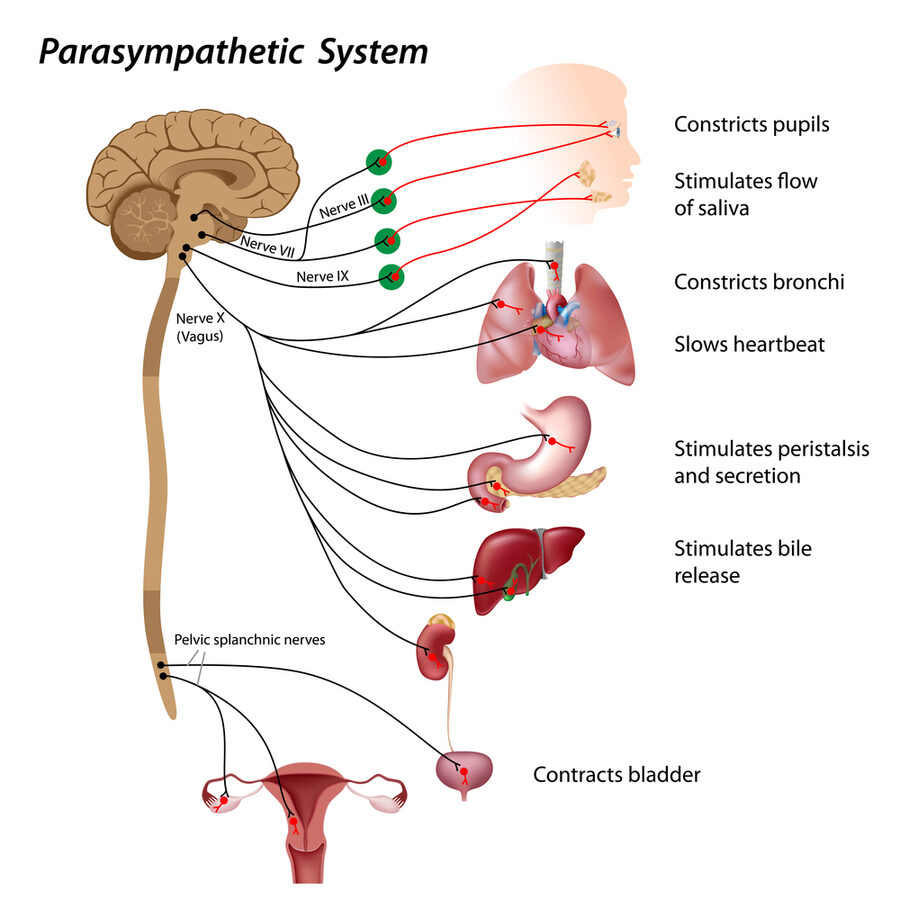
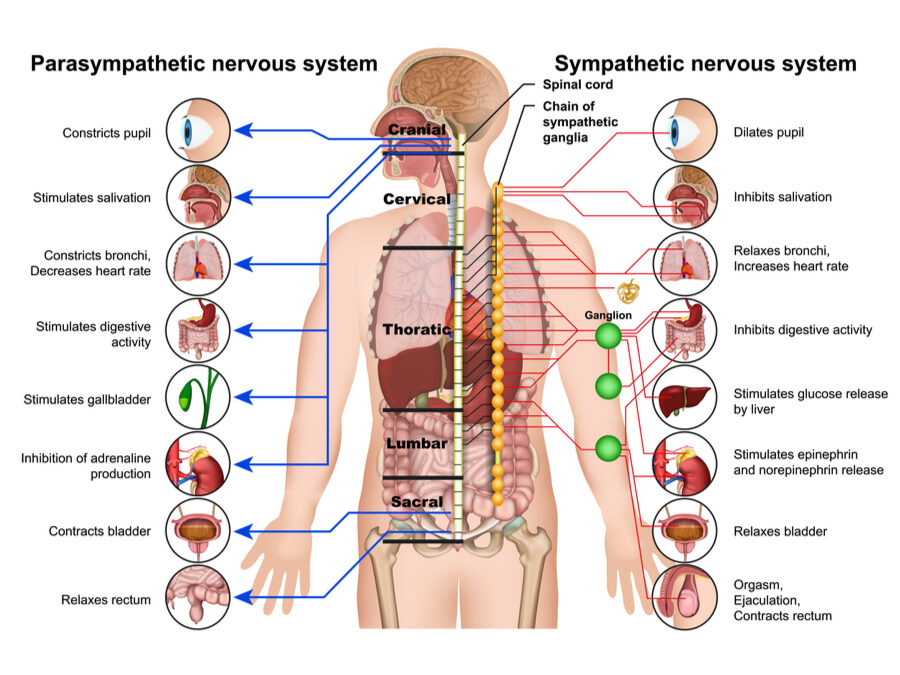
The parasympathetic nervous system (PSNS) is one of the two divisions of the autonomic nervous system (ANS). It is often referred to as the “rest and digest” system, “feed and breed,” or “relax, repair & reproduce” system. It is also called the craniosacral division of the autonomic nervous system because its nerve fibers originate from certain cranial and sacral nerves.
The PSNS helps the body conserve energy and should be dominant when the person is not experiencing a crisis. Activities that promote relaxation, such as massage, meditation, deep breathing, a warm bath, and enjoyable pastimes, can stimulate parasympathetic activity. These responses are classified as reflexive effects of massage (as opposed to mechanical effects, which are directly related to tissue manipulation).
Physiological Effects of Parasympathetic Activation:
- Decreased heart rate and reduced force of contraction
- Lowered blood pressure due to vasodilation
- Pupil constriction (miosis)
- Relaxation of skeletal muscles
- Bronchial constriction (airways become narrower, reducing airflow)
- Peripheral vasodilation, leading to increased circulation in the skin and extremities
- Stimulation of salivary glands, increasing saliva production
- Increased secretion of digestive enzymes to aid in food breakdown
- Increased intestinal motility (peristalsis) to facilitate digestion
- Contraction of the urinary bladder and relaxation of the urinary sphincter, promoting urination
- Hormonal changes, including a reduction in stress hormones such as cortisol and epinephrine
Practical Applications: How Massage Enhances Parasympathetic Activation
Massage therapy is a powerful tool for shifting the body into a parasympathetic-dominant state, promoting relaxation and physiological recovery. This shift explains why massage is often recommended for stress reduction, pain relief, and improved overall well-being.
During a massage session, the nervous system interprets slow, rhythmic, and intentional touch as a signal of safety, reducing the body’s need for heightened alertness. This results in:
- More efficient oxygen and nutrient delivery due to increased circulation from peripheral vasodilation. This is particularly beneficial for clients with poor circulation, muscle tension, or high blood pressure.
- Improved digestive function, which is why some clients may experience stomach gurgling during or after a session. This is a natural sign that the parasympathetic system is becoming dominant.
- Reduction in stress-related symptoms, such as tension headaches, jaw clenching, or shallow breathing, as muscle relaxation and decreased cortisol levels encourage a calmer state.
- Enhanced recovery from physical strain or injury, since parasympathetic activation supports cellular repair, immune function, and muscle recovery.
The parasympathetic nervous system thrives when the body feels safe and at ease. Massage plays a key role in creating this state, allowing the body to prioritize functions like digestion, repair, and relaxation—essential processes that are often neglected in high-stress lifestyles.
Sympathetic Nervous System
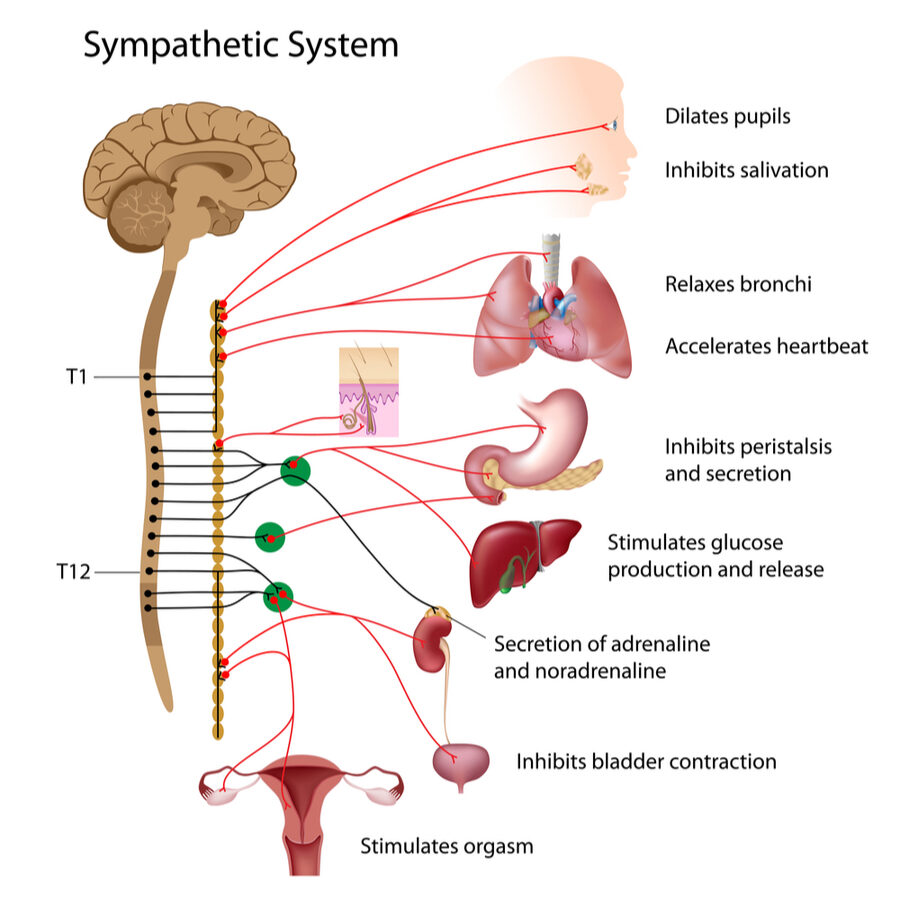
Chronic stress leads to prolonged sympathetic nervous system (SNS) activation, which can have serious health consequences. The SNS is the body’s “fight or flight” system (sometimes expanded to “fight, fright, or flight”) and plays a key role in preparing the body to respond to perceived threats. It is also called the thoracolumbar division of the autonomic nervous system because its nerve fibers originate in the thoracic and lumbar regions of the spinal cord.
The SNS is essential for survival, allowing for rapid responses to danger. However, chronic overactivation can contribute to conditions such as hypertension, digestive disorders, anxiety, insomnia, and immune suppression. This is why techniques that promote parasympathetic dominance, such as massage, are beneficial for overall health.
Physiological Effects of Sympathetic Activation:
- Increased heart rate and stronger heart contractions (increased cardiac output)
- Elevated blood pressure due to vasoconstriction
- Bronchodilation (widening of the airways to improve oxygen intake)
- Decreased digestive activity (slower gastric motility and enzyme secretion)
- Glycogen breakdown in the liver, converting stored glycogen into glucose for immediate energy
- Muscle tension (preparing for rapid movement or defense)
- Peripheral vasoconstriction, which reduces blood flow to the skin and extremities (cold hands and feet)
- Hormonal shifts, including increased levels of epinephrine (adrenaline) and norepinephrine, which heighten alertness and energy availability
In situations of prolonged stress, these responses persist beyond their immediate usefulness, contributing to chronic inflammation, metabolic imbalances, and cardiovascular strain. This is one of the key reasons massage therapy and other relaxation techniques are used to counteract excessive sympathetic dominance.
Enteric Nervous System
One additional component of the autonomic nervous system, sometimes mentioned in certain sources, is the enteric nervous system (ENS). The ENS plays a significant role in regulating digestion, often referred to as the “second brain” due to its ability to function independently of the central nervous system. However, for the purposes of the MBLEx and most general massage therapy courses, the primary focus should remain on the sympathetic and parasympathetic divisions of the ANS.
Summary of Key Terms
| Term | Definition |
|---|---|
| Autonomic Nervous System (ANS) | The part of the nervous system that controls involuntary functions, including heart rate, digestion, and respiration. It has two main divisions: the sympathetic and parasympathetic nervous systems. |
| Parasympathetic Nervous System (PSNS) | The division of the ANS responsible for relaxation, energy conservation, and digestion. Often referred to as the “rest and digest” system. |
| Sympathetic Nervous System (SNS) | The division of the ANS that prepares the body for stress or danger. Known as the “fight or flight” system, it increases heart rate, blood pressure, and energy availability. |
| Craniosacral Division | Another term for the parasympathetic nervous system, referring to where its nerve fibers originate (cranial and sacral regions). |
| Thoracolumbar Division | Another term for the sympathetic nervous system, named for its origin in the thoracic and lumbar spinal regions. |
| Peripheral Vasodilation | Widening of blood vessels in the skin and extremities, leading to increased blood flow and lower blood pressure. A parasympathetic effect. |
| Peripheral Vasoconstriction | Narrowing of blood vessels in the skin and extremities, reducing blood flow. This sympathetic response helps redirect blood to vital organs during times of stress. |
| Bronchodilation | Widening of the bronchial airways in the lungs to allow more oxygen intake. A sympathetic response. |
| Bronchoconstriction | Narrowing of the bronchial airways, reducing airflow. A parasympathetic response. |
| Reflexive Effects of Massage | Physiological responses triggered by the nervous system, such as relaxation and stress reduction, rather than mechanical manipulation of tissues. |
| Mechanical Effects of Massage | Direct physical effects on tissues, such as improved circulation and muscle pliability, due to manual pressure and movement. |